
Post-Offer Back & Musculoskeletal Screening
Post-offer back and musculoskeletal screening for material-handling roles — a job-matched functional assessment by licensed physical therapy professionals that confirms a new hire can handle the lifting and documents a musculoskeletal baseline to defend against future injury claims.
A post-offer back and musculoskeletal screening is job-matched functional testing that confirms a new hire can lift and move as the role requires, and documents a baseline to defend against future injury claims.
Back and musculoskeletal injuries are among the most common — and most expensive — claims in physically demanding work. A post-offer back screen does two jobs at once: it confirms a new hire can safely handle the lifting the role requires, and it documents a musculoskeletal baseline that protects you when a claim surfaces months later.
Job-matched, task-specific testing
Diversified builds each screen from the actual material-handling demands of the role — floor-to-knuckle and waist-to-shoulder lifts at the real weights and heights, carries, push/pull force, and repetition. A machine-operator screen looks different from a warehouse or driver screen because the jobs do. Every applicant for the same job category is tested the same way and scored able or unable to perform against the documented requirements.
A baseline that protects you later
The screen documents the applicant's musculoskeletal condition at the point of hire — range of motion, strength, and movement quality. If a back or musculoskeletal injury is later claimed, that baseline is objective evidence of the employee's condition when they started — a strong defense against inflated or pre-existing-condition claims.
Post-offer, uniform, and defensible
Administered post-offer and uniformly across a job category, matched to the position's documented essential functions — the structure that keeps physical screening consistent with ADA expectations. You make the hiring decision; we give you the objective, documented basis.
Key Features
Task-Specific Material-Handling Testing
Floor-to-knuckle, waist-to-shoulder, and overhead lifts, carries, and push/pull at the role's real weights and heights.
Musculoskeletal Baseline
Documents range of motion, strength, and movement quality at hire — objective defense against future injury claims.
PT-Administered & Objective
Conducted and scored by licensed physical therapy professionals — able or unable to perform, with body-mechanics notes.
Post-Offer & Uniform
Administered after a conditional offer and applied the same way to every candidate in a job category — the defensible structure.
Clear Determination
A written result: the applicant's physical abilities do, or do not, match the job description.
Built for Lifting-Heavy Roles
Purpose-built for material handling, machine operation, warehouse, and other high-back-injury-risk positions.
Medical & Compliance Requirements
Compliance Requirement
Post-offer timing (ADA)
Physical and musculoskeletal screening used in hiring should be conducted after a conditional job offer and required of all entering employees in the same job category (42 U.S.C. 12112(d)(3); 29 CFR 1630.14(b)).
Job-related and consistent with business necessity
If a screen excludes an applicant, the standard must be job-related and consistent with business necessity — which is why every back screen maps to the documented essential functions of the specific role (29 CFR 1630.10).
Reasonable accommodation and direct threat
Where a result reflects a disability, the employer must consider whether a reasonable accommodation would allow the person to perform the essential functions, and may withdraw an offer only where they cannot, or would pose a direct threat. We provide the documentation; the decision, and its legal basis, remain the employer's.
Frequently Asked Questions
A post-offer, job-matched musculoskeletal and functional screen for physically demanding roles, administered and scored by licensed physical therapy professionals. It confirms a new hire can perform the job's lifting demands and documents a musculoskeletal baseline.
It documents the employee's musculoskeletal condition at the point of hire. If a back or musculoskeletal injury is later claimed, that baseline is objective evidence of their condition when they started — a strong defense against inflated or pre-existing-condition claims.
After a conditional job offer, and required uniformly of all entering employees in the same job category. Post-offer timing and consistency are what keep physical screening defensible.
The screen gives you an objective, job-related basis for the decision — but the decision and its legal justification are the employer's, subject to reasonable-accommodation and direct-threat analysis. We provide the documentation, not the legal determination.
$125 per applicant, with consortium and contract rates available.
Same underlying method. The back screen focuses on material-handling and musculoskeletal demands and the injury-baseline use case for high-back-risk roles, while the Post-Offer Physical & Functional Screening is the general version and can bundle a pre-employment drug test.
A DOT physical is a federally required medical certification for commercial drivers. A back screen is a job-specific functional and musculoskeletal screen — it is not a medical certificate.
This screen is built for post-offer new hires. For current employees — return-to-work, post-incident, or a safety concern — see our Fit-for-Duty & Return-to-Work Evaluations.
Related Services
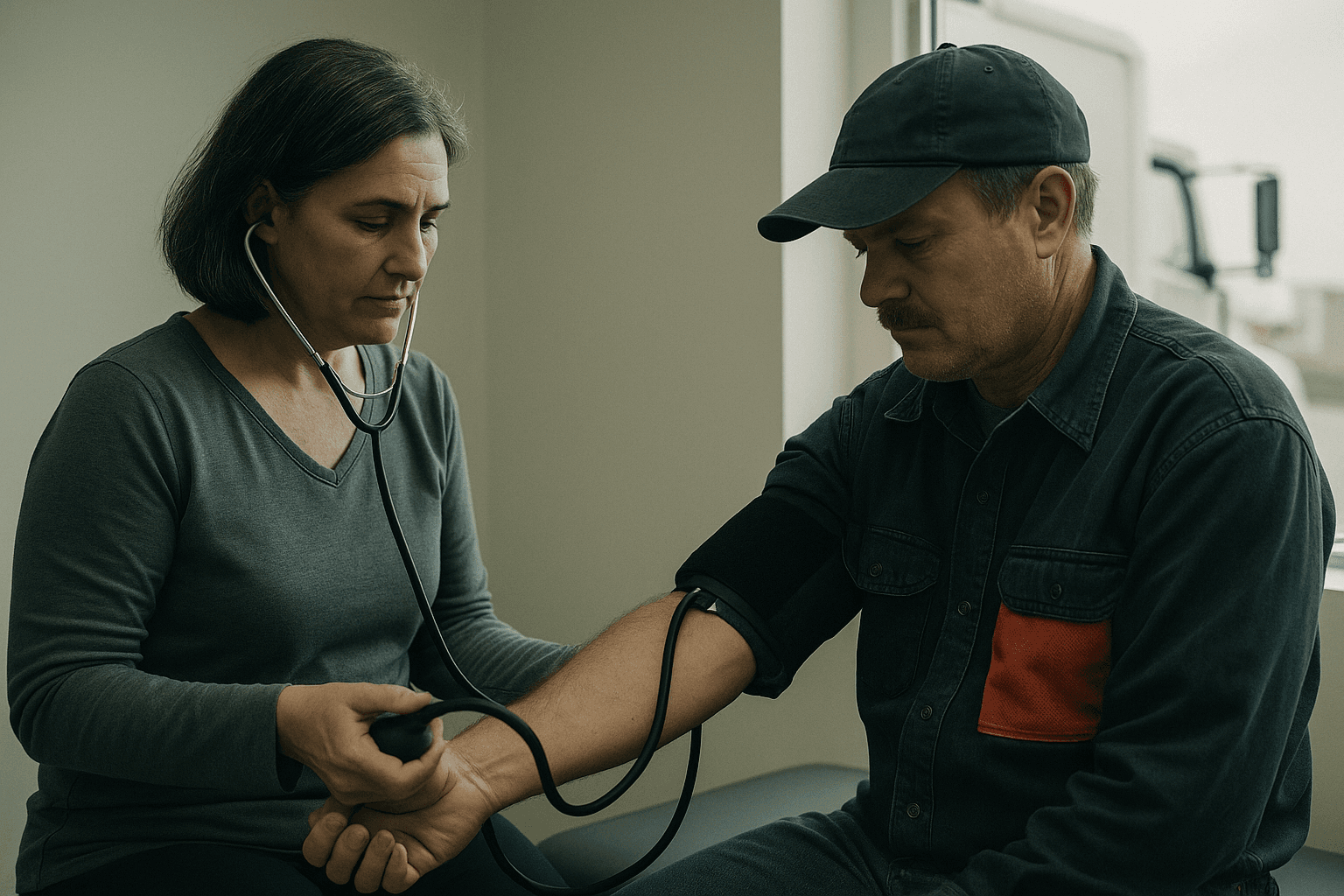
DOT Physical Examinations
Fast, FMCSA-compliant DOT physicals at our Lincoln and Beatrice clinics — about 30 minutes, performed by National Registry-certified examiners on staff. For full-service compliance clients, we track every driver's medical card and flag renewals before they lapse.
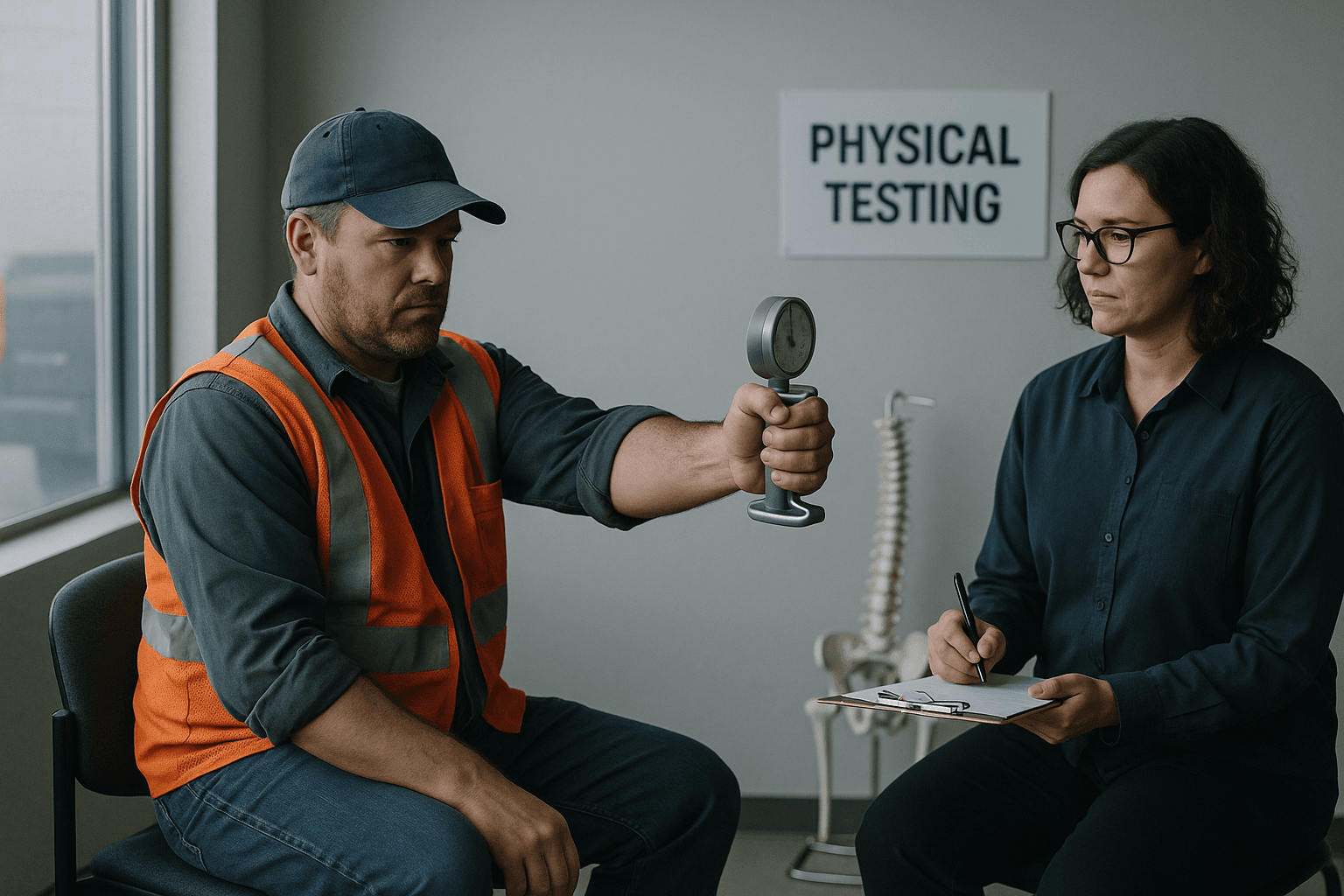
Fit-for-Duty & Return-to-Work Evaluations
Objective fit-for-duty and return-to-work evaluations for current employees — a functional work-readiness assessment by licensed physical therapy professionals, matched to the job's real demands. Used after injury or leave, a safety concern, or a workplace incident to decide who can safely return.
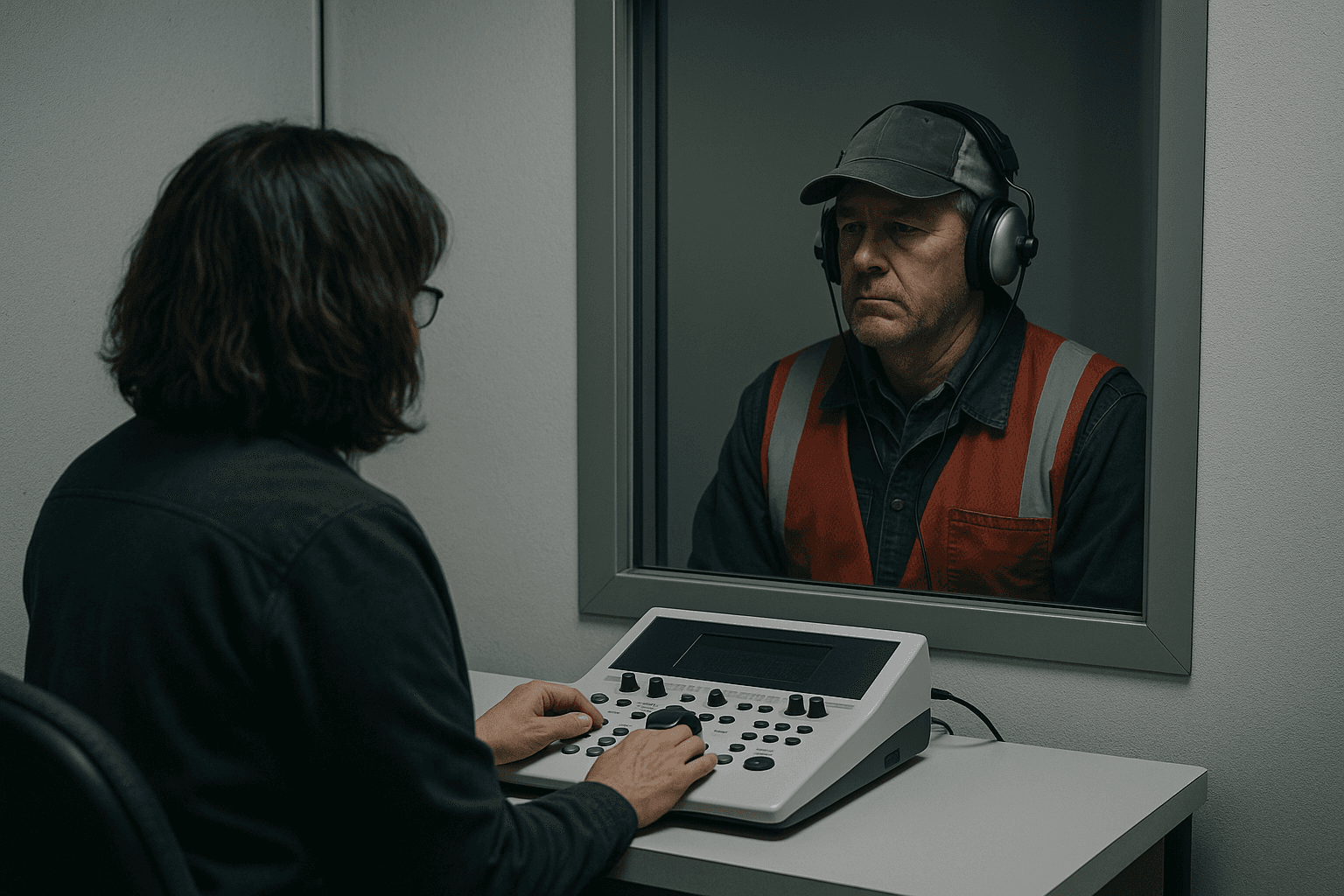
Audiometric Testing & Hearing Conservation
OSHA 1910.95 hearing testing for noise-exposed workforces — baseline and annual audiograms with standard-threshold-shift tracking. Test individuals at our Lincoln clinic, or bring our growing on-site mobile service to your factory floor for whole-crew baseline and annual screening.
Put lifting-heavy roles on solid footing — confirm new hires can do the work and document a baseline that protects you from future injury claims.
Contact our occupational health specialists to ensure your workforce meets all medical certification and fitness-for-duty requirements.
- C/TPA Program Administration
- 24/7 Post-Accident Response
- 3,000+ Testing Sites Nationwide