
Audiometric Testing & Hearing Conservation
OSHA 1910.95 hearing testing for noise-exposed workforces — baseline and annual audiograms with standard-threshold-shift tracking. Test individuals at our Lincoln clinic, or bring our growing on-site mobile service to your factory floor for whole-crew baseline and annual screening.
Audiometric (hearing) testing establishes baseline and annual audiograms and tracks standard threshold shifts under OSHA's hearing conservation standard (29 CFR 1910.95). We test on-site with mobile crews or in-clinic in Lincoln.
Noise-induced hearing loss is permanent, gradual, and one of the most common — and most preventable — occupational illnesses. When employees are exposed to an 8-hour average of 85 decibels or more, OSHA requires a hearing conservation program built on audiometric testing (29 CFR 1910.95).
Two ways to test — the clinic, or your floor
For individual and pre-placement testing, employees are tested at our Lincoln clinic, often alongside their other occupational-health services. For a full workforce, our growing mobile service brings the testing to you: partner technicians perform on-site hearing tests right at your facility, so you can baseline a new crew or run annual testing without shutting down production or sending people across town.
Baseline, annual, and the shift that matters
We establish each employee's baseline audiogram, then compare every annual test against it to catch a standard threshold shift — an average change of 10 dB or more at 2,000, 3,000, and 4,000 Hz in either ear. When a shift appears, you get prompt notification and the documentation to act within OSHA's timelines, review hearing protection, and make the OSHA 300 Log recordability call.
Built for hearing conservation programs
Whether you're standing up a hearing conservation program for a noisy plant or keeping an established one on schedule, we handle the testing and the records so the program runs — CAOHC-certified audiometric technicians, calibrated audiometers, and complete recordkeeping retained per OSHA requirements.
Key Features
On-Site Mobile Testing
Our growing service brings audiometric testing to your facility for whole-crew baseline and annual hearing conservation testing.
OSHA 1910.95 Baseline & Annual
Baseline audiograms and annual retests, compared to detect hearing changes early.
STS Detection & 21-Day Notification
We identify standard threshold shifts and notify you with the documentation to act within OSHA timelines.
CAOHC-Certified Technicians
Our audiometric technicians are CAOHC-certified occupational hearing conservationists using calibrated, ANSI-standard audiometers.
Hearing Conservation Program Support
Help standing up a new program or keeping an established one on schedule.
OSHA-Compliant Recordkeeping
Complete audiometric records retained per OSHA requirements.
Medical & Compliance Requirements
Compliance Requirement
When a program is required — 29 CFR 1910.95
An employer must implement a hearing conservation program when employee noise exposure equals or exceeds an 8-hour time-weighted average of 85 dBA (the action level). The program includes audiometric testing, hearing protection, training, and recordkeeping.
Baseline audiogram
A valid baseline must be established within 6 months of an employee's first exposure at or above the action level — extended to within 1 year when a mobile testing service is used, provided hearing protection is worn in the interim — and preceded by at least 14 hours without workplace noise exposure.
Annual audiogram and standard threshold shift (STS)
Employees must be retested at least annually, and each test compared to the baseline. A standard threshold shift — an average of 10 dB or more at 2,000, 3,000, and 4,000 Hz in either ear — triggers employee notification within 21 days, a review and upgrade of hearing protection, and a recordability determination for the OSHA 300 Log.
Who may administer the test
Audiometric testing must be conducted by a licensed or certified audiologist, a physician, a CAOHC-certified occupational hearing conservationist, or a technician responsible to an audiologist or physician (29 CFR 1910.95(g)(3)), using an audiometer calibrated to the ANSI S3.6 standard (1910.95(h)).
Frequently Asked Questions
Any employer whose workers are exposed to an 8-hour average of 85 dBA or more must run a hearing conservation program that includes baseline and annual audiograms under OSHA 29 CFR 1910.95.
The baseline is the reference test established at first exposure — within 6 months, or within 1 year when a mobile testing service is used. Each annual audiogram is then compared to that baseline to detect a standard threshold shift.
An average change of 10 dB or more at 2,000, 3,000, and 4,000 Hz in either ear, compared to the baseline. An STS triggers employee notification within 21 days, a review and upgrade of hearing protection, and an OSHA 300 Log recordability determination.
Yes. Our growing mobile service brings audiometric testing to your facility for whole-workforce baseline and annual testing — ideal for factories and crews, with minimal downtime.
A clinic audiogram is $75 per employee. On-site mobile hearing-conservation testing is quoted by program size — per employee, based on headcount and location.
Only a few minutes per employee. On-site testing is set up to move a full crew through efficiently.
Our CAOHC-certified audiometric technicians — certified through the Council for Accreditation in Occupational Hearing Conservation — using calibrated, ANSI-standard audiometers, meeting OSHA's qualified-personnel requirement under 1910.95.
We notify you promptly with the documentation you need to meet OSHA's 21-day timeline, review and upgrade hearing protection, and determine whether the shift is recordable on the OSHA 300 Log.
Related Services
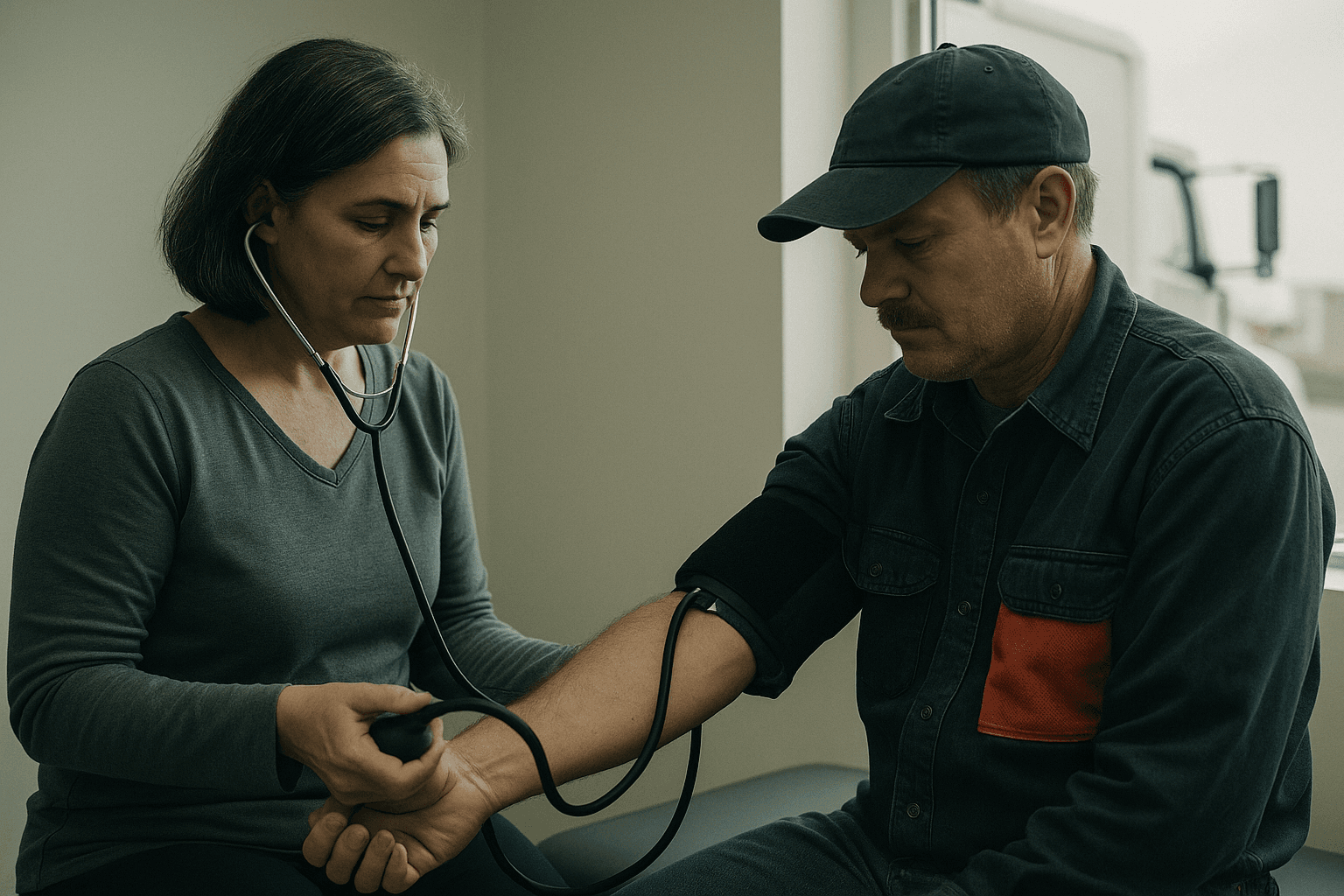
DOT Physical Examinations
Fast, FMCSA-compliant DOT physicals at our Lincoln and Beatrice clinics — about 30 minutes, performed by National Registry-certified examiners on staff. For full-service compliance clients, we track every driver's medical card and flag renewals before they lapse.
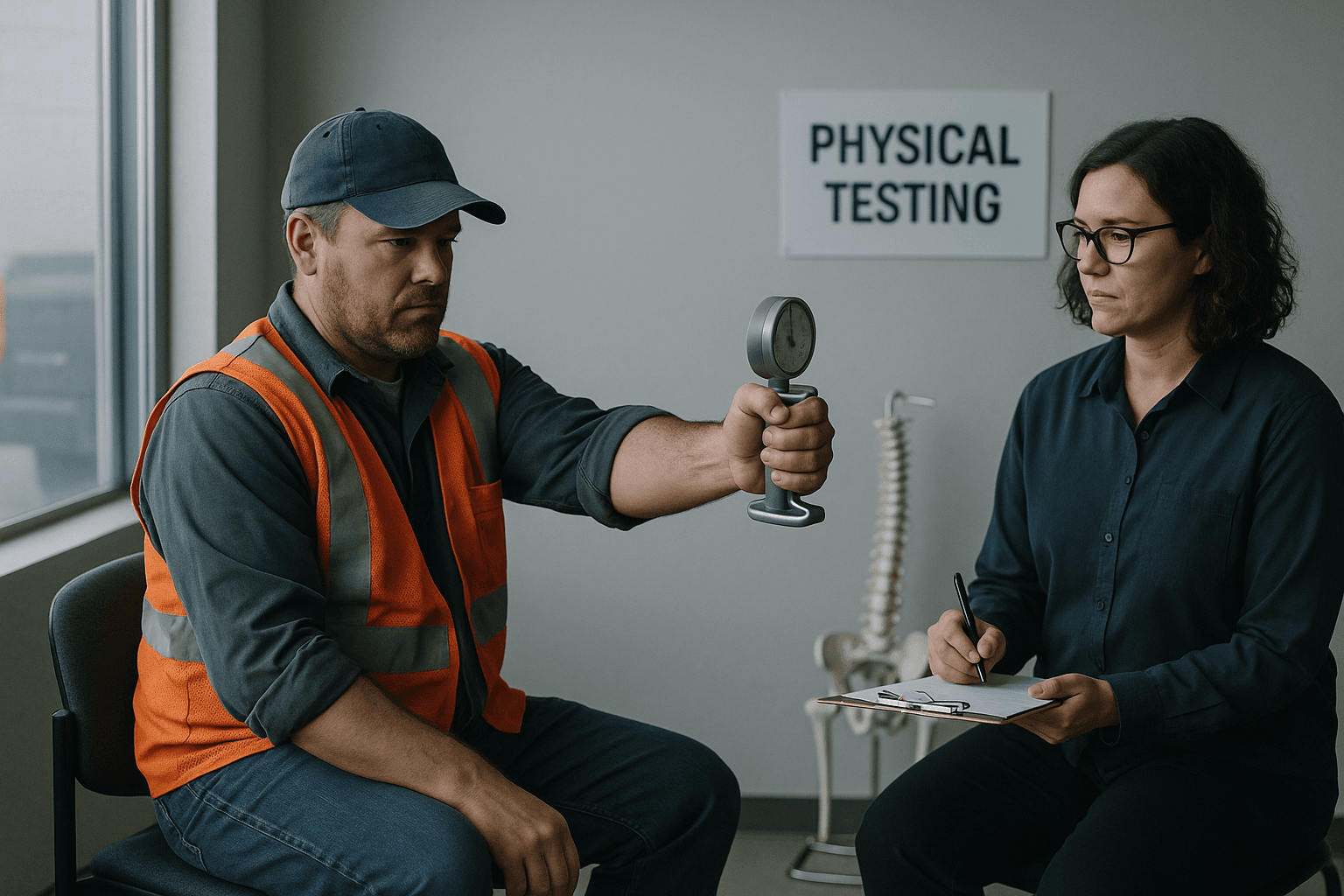
Fit-for-Duty & Return-to-Work Evaluations
Objective fit-for-duty and return-to-work evaluations for current employees — a functional work-readiness assessment by licensed physical therapy professionals, matched to the job's real demands. Used after injury or leave, a safety concern, or a workplace incident to decide who can safely return.
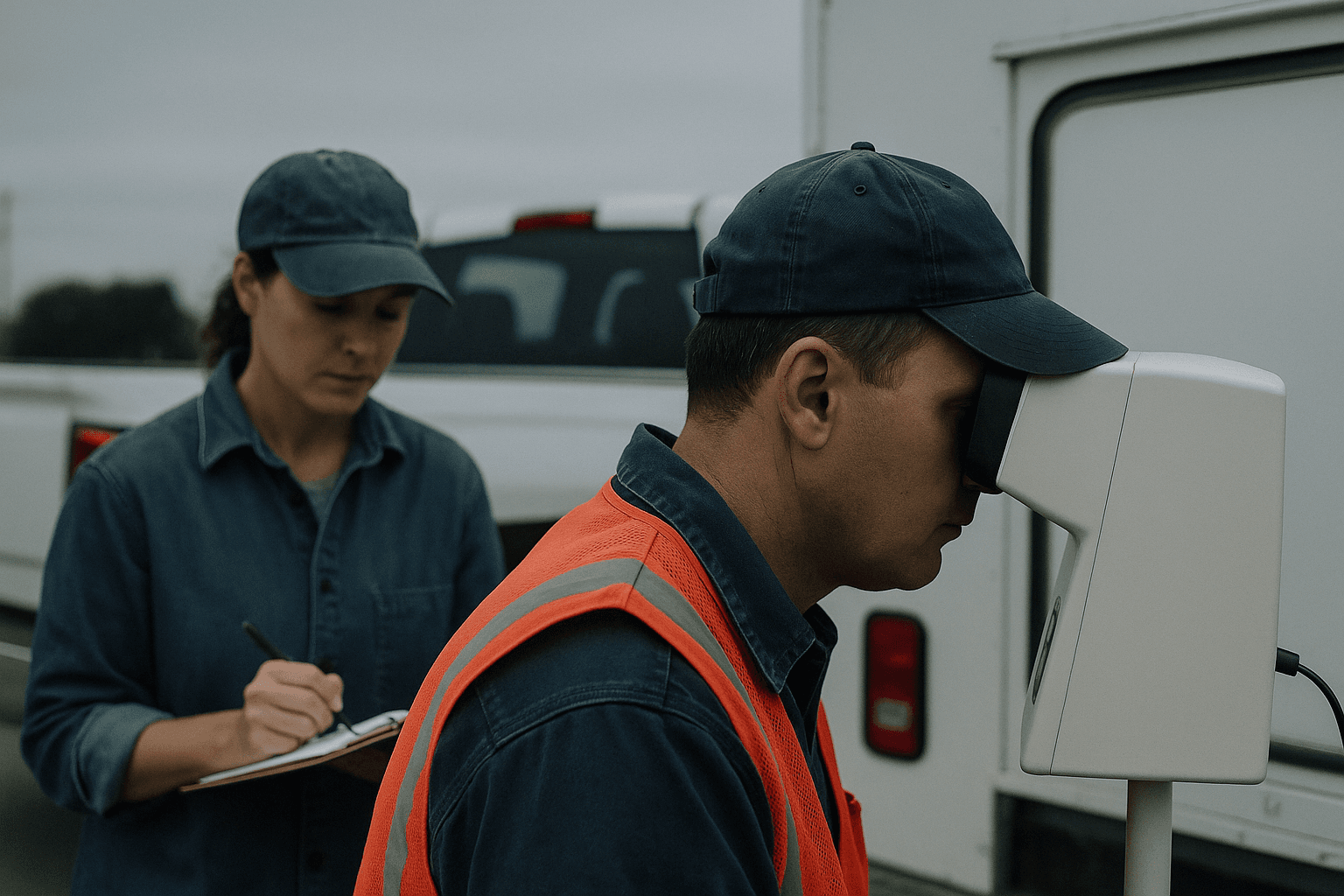
Vision Screening (Snellen & Color Vision)
Fast, low-cost vision screening — Snellen visual acuity and Ishihara color vision — most often built into a custom pre-employment or occupational-health package alongside functional, drug, and hearing testing. Also a quick pre-check that a driver meets the DOT 20/40 standard.
Protect hearing and stay compliant — bring OSHA audiometric testing to your floor with on-site mobile testing, or send employees to our Lincoln clinic.
Contact our occupational health specialists to ensure your workforce meets all medical certification and fitness-for-duty requirements.
- C/TPA Program Administration
- 24/7 Post-Accident Response
- 3,000+ Testing Sites Nationwide