
Vision Screening (Snellen & Color Vision)
Fast, low-cost vision screening — Snellen visual acuity and Ishihara color vision — most often built into a custom pre-employment or occupational-health package alongside functional, drug, and hearing testing. Also a quick pre-check that a driver meets the DOT 20/40 standard.
Occupational vision screening checks visual acuity (Snellen) and color vision (Ishihara) for job fitness or a DOT 20/40 pre-check — standalone or bundled with functional, drug, and hearing testing.
Some roles simply require good vision — a forklift operator reading a load chart, an electrician distinguishing wire colors, a driver meeting the DOT standard. Vision screening confirms an employee meets that bar, quickly and inexpensively.
What we screen
• Snellen visual acuity — distance vision, each eye, with or without correction
• Ishihara color vision — the ability to distinguish colors where the job requires it
Usually part of a bigger package
Most employers don't order a vision test on its own. It's one line in a package we build for them — a custom pre-employment screen that pairs a job-specific functional test, a defined drug panel, a hearing test, and a vision test into a single, consistent onboarding step. We assemble the exact combination your roles call for, delivered in one visit.
A quick DOT pre-check, too
For CDL drivers, the DOT physical requires at least 20/40 acuity in each eye, a 70-degree field of vision, and the ability to recognize traffic-signal colors (49 CFR 391.41). A vision screen beforehand catches a correctable issue early — so a driver arrives at the physical with the right glasses or contacts and doesn't lose a certification cycle.
Key Features
Snellen Acuity + Color Vision
Distance visual acuity plus Ishihara color vision screening when the role requires it.
Package Component
Most often built into a custom pre-employment package with functional, drug, and hearing testing.
One-Visit Convenience
Screened alongside the rest of a pre-employment package in a single appointment.
DOT 20/40 Pre-Check
Confirms a driver meets the DOT vision standard before the physical, avoiding a lost certification cycle.
Job-Matched Standard
Screened against the vision requirements of the specific role.
Documented Result
A clear pass/refer determination with documentation for your files.
Medical & Compliance Requirements
Compliance Requirement
DOT vision standard — 49 CFR 391.41(b)(10)
A commercial driver must have distant visual acuity of at least 20/40 (Snellen) in each eye, with or without corrective lenses; distant binocular acuity of at least 20/40 in both eyes; a field of vision of at least 70 degrees in the horizontal meridian in each eye; and the ability to recognize the colors of traffic signals and devices showing standard red, green, and amber. When corrective lenses are needed to meet the standard, the medical examiner notes a corrective-lenses restriction on the certificate, and the driver must wear them while driving. A driver who cannot meet the acuity or field-of-vision standard in one eye may still qualify through FMCSA's alternative vision standard (49 CFR 391.44), which adds an ophthalmologist or optometrist evaluation and a road test.
Non-DOT roles
Outside DOT, vision requirements are set by the job. Where a role depends on visual acuity or color discrimination, a documented pre-employment screen — applied consistently and matched to the job's requirements — supports a defensible hiring standard.
Frequently Asked Questions
Yes. The DOT standard is at least 20/40 in each eye, with or without correction. A driver who needs corrective lenses to meet it must wear them while driving, and the examiner notes the requirement on the certificate.
A Snellen visual acuity test for distance vision in each eye, plus an Ishihara color vision test when the job requires color discrimination.
Yes — that's how most customers use it. We build a single pre-employment package that pairs vision screening with functional testing, a defined drug panel, and hearing testing, completed in one visit.
$35 for the Snellen acuity screen and $35 for the Ishihara color vision screen, with consortium and contract rates available.
Only where the job requires it — equipment operators, roles needing color discrimination, or other positions with a documented visual standard. We match the screen to the role.
We provide a documented result and refer the employee to obtain corrective lenses or a specialist evaluation. A quick re-screen then confirms they meet the standard.
Related Services

DOT Physical Examinations
Fast, FMCSA-compliant DOT physicals at our Lincoln and Beatrice clinics — about 30 minutes, performed by National Registry-certified examiners on staff. For full-service compliance clients, we track every driver's medical card and flag renewals before they lapse.
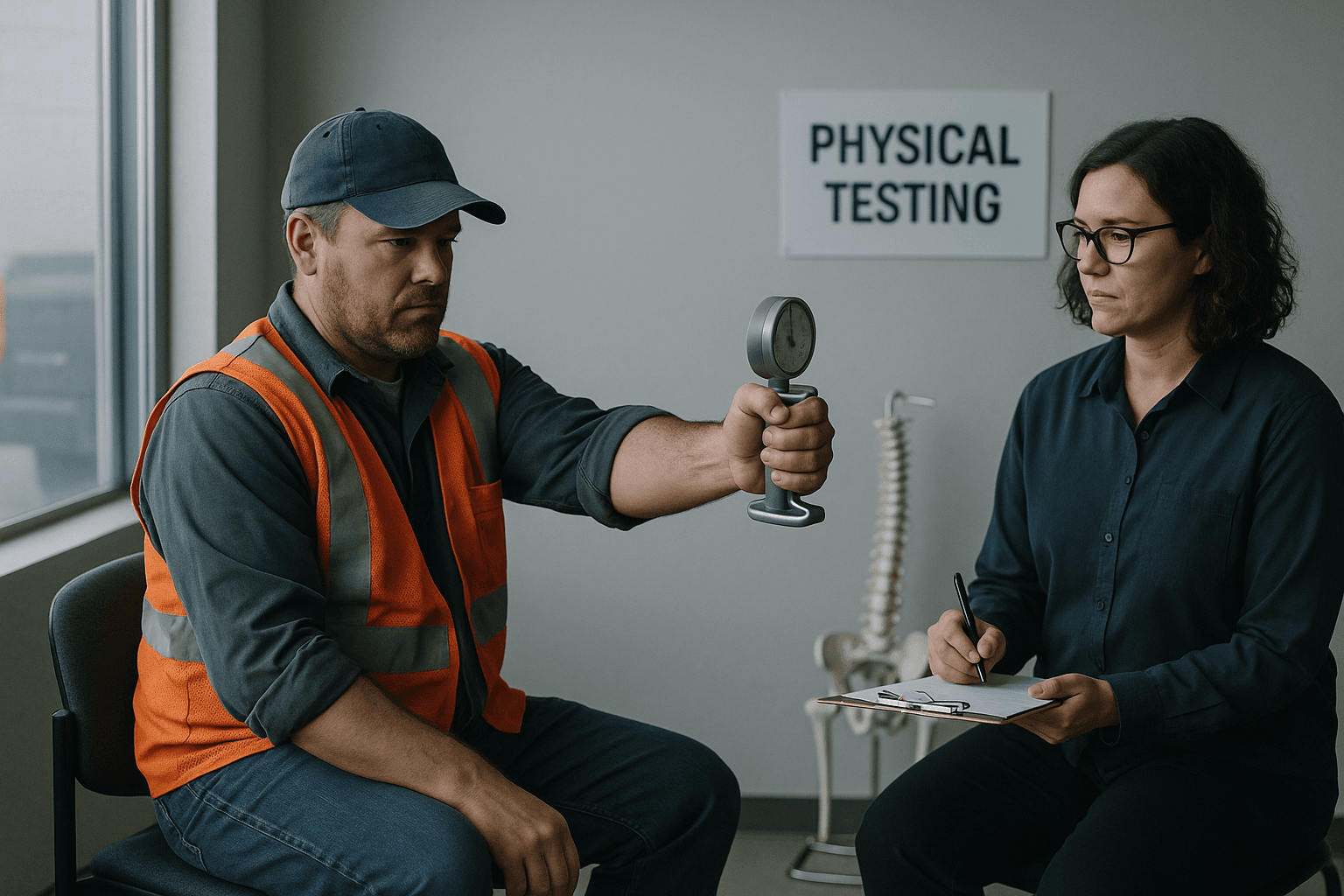
Fit-for-Duty & Return-to-Work Evaluations
Objective fit-for-duty and return-to-work evaluations for current employees — a functional work-readiness assessment by licensed physical therapy professionals, matched to the job's real demands. Used after injury or leave, a safety concern, or a workplace incident to decide who can safely return.
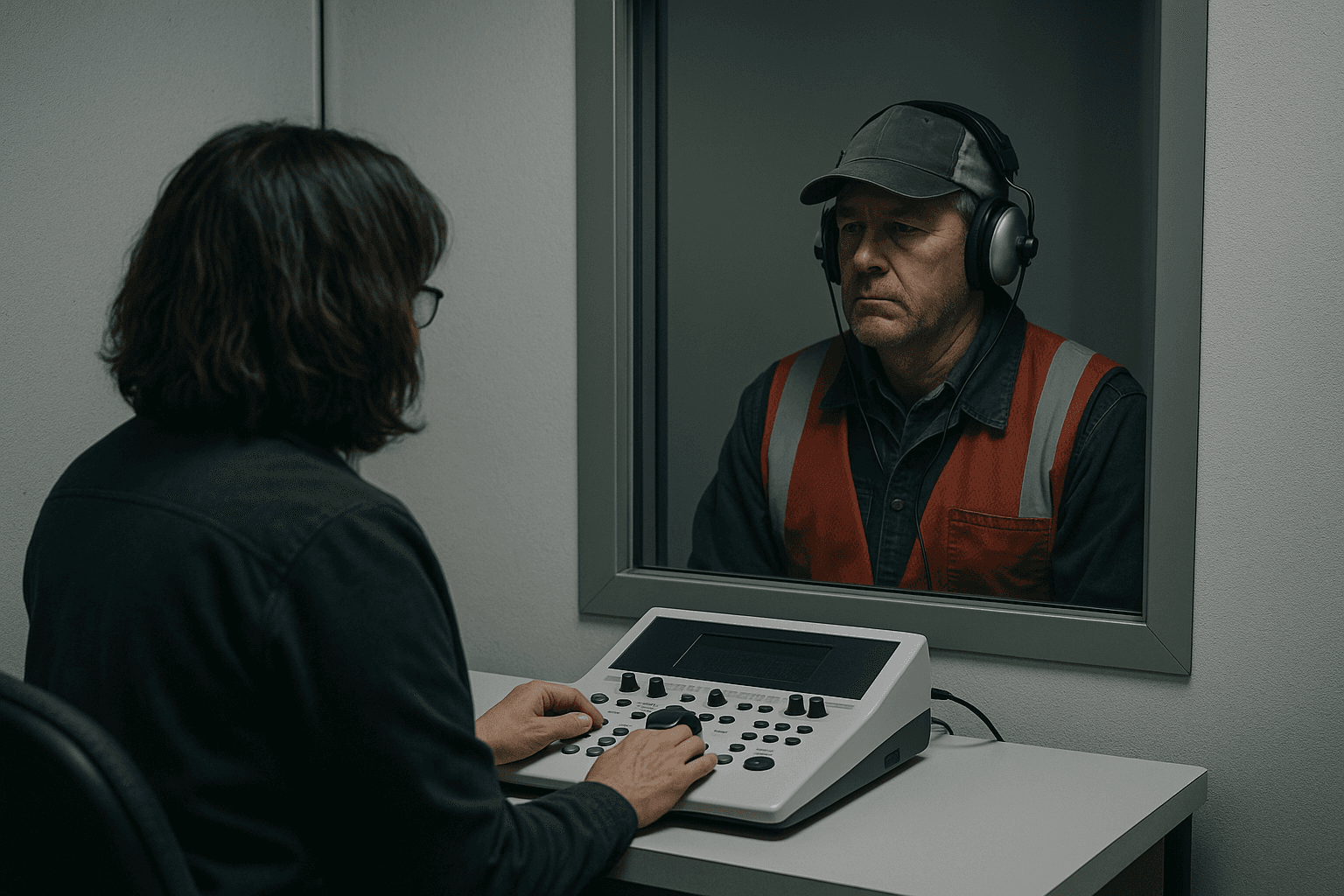
Audiometric Testing & Hearing Conservation
OSHA 1910.95 hearing testing for noise-exposed workforces — baseline and annual audiograms with standard-threshold-shift tracking. Test individuals at our Lincoln clinic, or bring our growing on-site mobile service to your factory floor for whole-crew baseline and annual screening.
Add vision screening to a complete pre-employment package — functional, drug, hearing, and vision in one visit — or book a quick standalone screen.
Contact our occupational health specialists to ensure your workforce meets all medical certification and fitness-for-duty requirements.
- C/TPA Program Administration
- 24/7 Post-Accident Response
- 3,000+ Testing Sites Nationwide