Respirator Fit Testing & Medical Evaluations
OSHA respirator fit testing and provider-reviewed medical evaluations for N95 and half-mask respirators, with optional pulmonary function testing. Use DSC for the fit testing, the evaluation, or the complete program — on-site, in-clinic, or at a coordinated event.
Respirator fit testing verifies a tight-sealing respirator actually seals to a worker, paired with the OSHA-required respirator medical evaluation (29 CFR 1910.134). We do both on-site, in-clinic, or at events.
Getting respiratory protection right takes two things: every employee must be medically cleared to wear a respirator, and the respirator must be proven to seal on that specific person's face. OSHA requires the medical evaluation first — before an employee is fit tested or wears a respirator (29 CFR 1910.134(e)) — then fit testing before initial use and at least annually after (1910.134(f)). Diversified Safety & Compliance delivers both, together or on their own.
Step 1 — Respirator medical evaluation
Employees complete OSHA's Appendix C medical questionnaire online, and our licensed provider reviews each response and issues the clearance determination — fast, confidential, and fully documented. Some employers use DSC for this step alone and run fit testing with their own staff; others hand us the whole program. Both work.
Step 2 — Qualitative fit testing
Once an employee is cleared, we confirm the respirator actually seals. Diversified performs qualitative fit testing (QLFT) using the OSHA-accepted Appendix A protocols — Bitrex, saccharin, isoamyl acetate, and irritant smoke. Qualitative testing is the approved method for the respirators most employers issue: N95 filtering facepieces and half-mask negative-pressure respirators, at an assigned protection factor of 10 and a pass/fail fit factor of 100. Full-facepiece negative-pressure respirators must reach a higher fit factor and require quantitative testing. For powered (PAPR) or supplied-air respirators, talk with us about the right method for your equipment.
Step 3 — Optional pulmonary function testing
When your program or provider calls for it, we add spirometry (PFT) as a clinical screen, commonly bundled with the fit test in a single visit. PFT is not mandated by OSHA's respiratory standard, but it is a valuable baseline for employees working in demanding respiratory environments.
Delivered the way your operation runs
We bring certified administrators and equipment to your facility, host testing at our clinic, or staff a coordinated event for larger workforces. Every evaluation, fit test, and PFT is captured in complete electronic documentation and synced to our compliance platform, so annual due dates and clearance status never slip.
Key Features
Provider-Reviewed Medical Clearance
Employees complete OSHA's Appendix C questionnaire online; our licensed provider reviews each one and issues the clearance — the required first step before any fit test.
OSHA-Accepted Qualitative Protocols
Bitrex, saccharin, isoamyl acetate, and irritant-smoke methods for N95 and half-mask respirators, run exactly to OSHA Appendix A.
Certified Administrators
Fit tests are administered by trained, certified staff with documented competency and calibrated, maintained equipment.
Optional Pulmonary Function Testing
Add spirometry (PFT) as a clinical baseline, commonly bundled with the fit test in a single visit.
Mobile, On-Site & Event Testing
We come to your facility or run a coordinated event — minimizing downtime and travel for your team.
Complete Documentation
Every evaluation and fit test is documented with employee, date, respirator make/model/size, protocol, and result — as OSHA requires.
Platform Integration
Records sync to our compliance platform with automated reminders for annual re-evaluation and refit.
Medical & Compliance Requirements
Compliance Requirement
Medical evaluation first — 29 CFR 1910.134(e)
Before an employee may be fit tested or wear a respirator, the employer must provide a medical evaluation to determine the employee's ability to use one. The evaluation may be completed with OSHA's mandatory Appendix C questionnaire (or an equivalent examination) and must be reviewed by a physician or other licensed health-care professional (PLHCP). DSC's provider performs this review and issues the clearance.
Fit testing — 29 CFR 1910.134(f)
Employees must be fit tested on the same make, model, style, and size of respirator they will use — before initial use, whenever the respirator changes, and at least annually thereafter. Additional fit testing is required whenever a physical change could affect the facepiece seal, such as an obvious change in body weight, dental changes, facial scarring, or cosmetic surgery.
Appendix A protocols (mandatory)
All fit testing follows OSHA's Appendix A procedures exactly. The qualitative protocols DSC uses are:
• Bitrex (denatonium benzoate) solution aerosol
• Saccharin solution aerosol
• Isoamyl acetate (banana oil)
• Irritant smoke (stannic chloride)
Match the method to the respirator
Qualitative fit testing certifies a fit factor of 100, which satisfies negative-pressure respirators at an assigned protection factor of 10 — N95 filtering facepieces and half-mask respirators. A full-facepiece negative-pressure respirator is used at an APF of 50 and must reach a fit factor of 500, so it requires quantitative fit testing (QNFT). Powered (PAPR) and supplied-air respirators are fit tested in the negative-pressure mode and may use either method.
Facial hair
Tight-fitting respirators cannot be worn — or fit tested — when facial hair crosses the sealing surface (1910.134(g)(1)(i)(A)). Employees must be clean-shaven where the respirator seals; those who cannot be may use loose-fitting hooded or helmeted respirators that do not require a face seal.
Frequently Asked Questions
Yes — it is one of our primary services. Employees complete OSHA's Appendix C questionnaire online, our licensed provider reviews each one and issues the clearance, and you receive complete documentation. Many customers use us for the evaluation and then handle fit testing in-house or add our mobile fit testing later.
Yes — if each employee already holds a current respirator medical clearance from a physician or other licensed health-care professional, we can fit test on its own. OSHA requires that clearance before any fit test (29 CFR 1910.134(e)), so we'll confirm it's on file; if you'd like, we can handle the evaluation too.
Yes. OSHA requires a medical evaluation and clearance before an employee can be fit tested or wear a respirator. The evaluation is completed by a physician or other licensed health-care professional (PLHCP). DSC provides this evaluation directly, so clearance and fit testing can be coordinated as one program.
We fit test N95 filtering facepieces and half-mask negative-pressure respirators using OSHA-accepted qualitative protocols — the respirators most employers issue. Full-facepiece negative-pressure respirators require quantitative fit testing; for powered (PAPR) or supplied-air respirators, contact us to discuss the right method for your equipment.
Qualitative fit testing (QLFT) is a pass/fail method — the employee detects a test agent (sweet, bitter, or irritant) if the respirator leaks. It is approved for negative-pressure respirators with an assigned protection factor of 10 (N95 and half-mask), at a fit factor of 100. Quantitative fit testing (QNFT) uses an instrument to measure actual leakage and is required for full-facepiece negative-pressure respirators, which must reach a fit factor of 500. DSC performs qualitative testing.
OSHA requires fit testing before initial respirator use and at least annually thereafter. Additional fit testing is required if the employee uses a different respirator (make, model, style, or size) or if physical changes occur that could affect the fit — an obvious change in body weight, dental changes, facial scarring, or cosmetic surgery.
No. OSHA prohibits tight-fitting respirator use when facial hair interferes with the sealing surface. Employees must be clean-shaven where the respirator seals for both fit testing and use. Employees with beards may use loose-fitting respirators — such as hoods or helmets — that do not require a face seal.
Not by OSHA's respiratory protection standard — the required medical evaluation is questionnaire-based and reviewed by a licensed provider. DSC offers PFT (spirometry) as an optional clinical screen, commonly combined with the fit test in a single visit for employees in demanding respiratory environments.
A qualitative fit test typically takes 15–20 minutes per employee, including preparation and documentation. For on-site events, we can generally test three to four employees per hour, and more with staggered scheduling.
We try a different size of the same respirator model, then a different model or style. Most employees achieve a passing fit with proper selection. If an employee cannot pass with any available respirator, they cannot use a tight-fitting respirator for that task, and alternative controls or a loose-fitting respirator must be considered.
You receive complete records for each employee: medical clearance determination, fit test date, protocol used, respirator make/model/style/size, and pass/fail result — plus any PFT results. Records are retained and accessible through our compliance platform, with automated reminders for annual re-evaluation and refit.
Respirator medical clearance questionnaire (online, provider-reviewed) is $40 per employee. Fit testing is billed per test: $40 per fit test, or $55 combined with a pulmonary function test. On-site testing adds a $200 per-day event charge covering travel, cleaning, report processing, and secure data handling. Fit tests are billed per test because an employee may require more than one.
Related Services
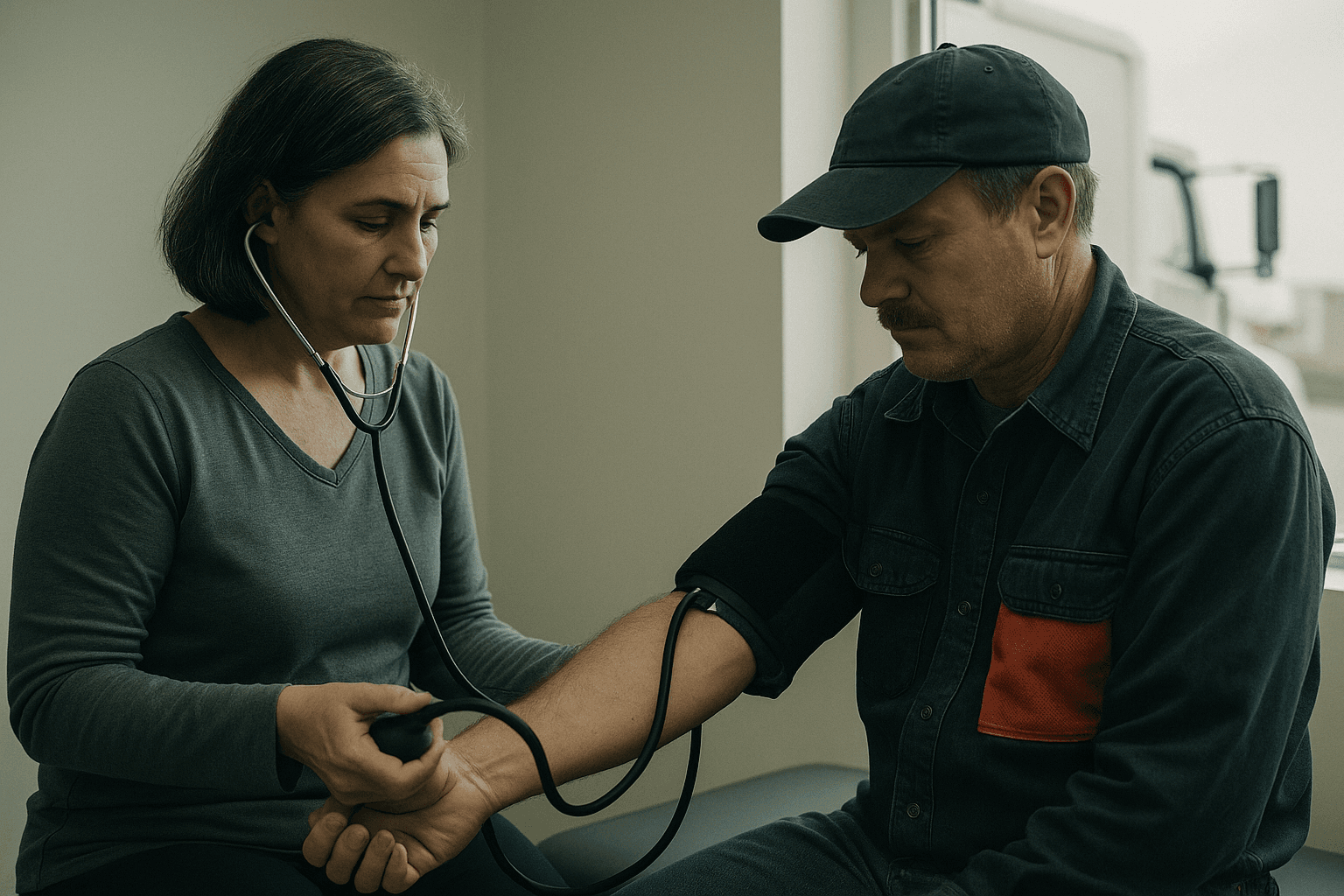
DOT Physical Examinations
Fast, FMCSA-compliant DOT physicals at our Lincoln and Beatrice clinics — about 30 minutes, performed by National Registry-certified examiners on staff. For full-service compliance clients, we track every driver's medical card and flag renewals before they lapse.
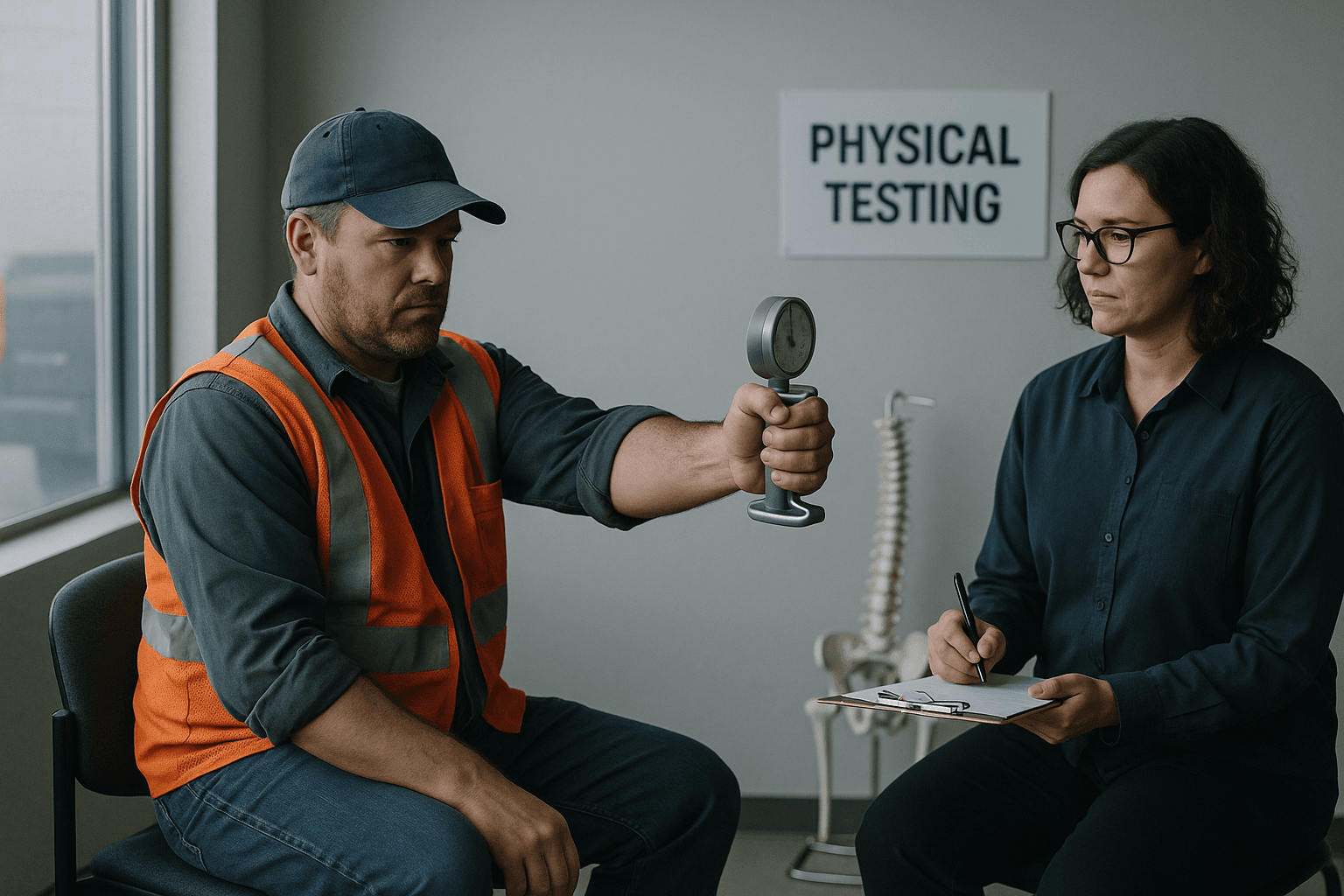
Fit-for-Duty & Return-to-Work Evaluations
Objective fit-for-duty and return-to-work evaluations for current employees — a functional work-readiness assessment by licensed physical therapy professionals, matched to the job's real demands. Used after injury or leave, a safety concern, or a workplace incident to decide who can safely return.
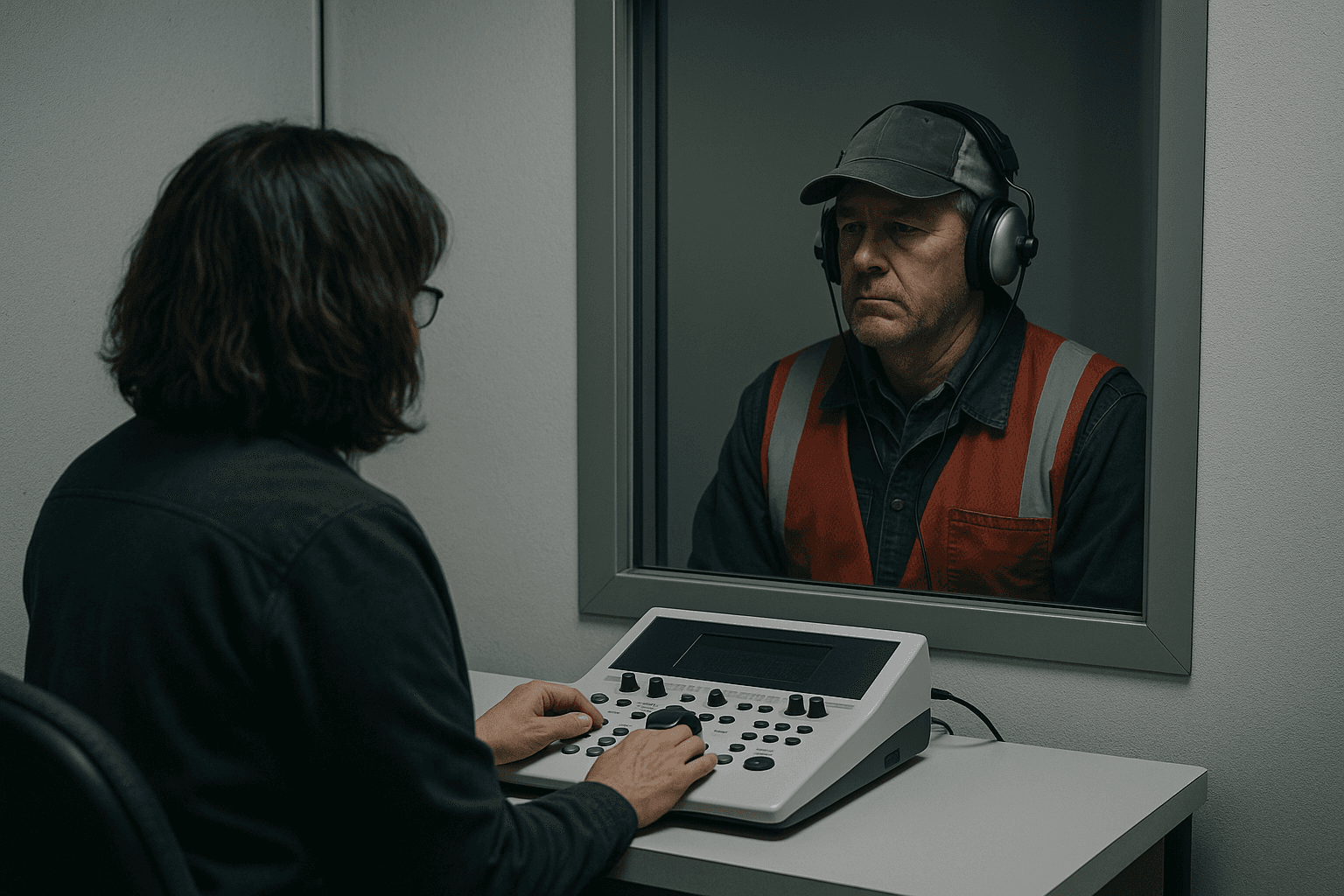
Audiometric Testing & Hearing Conservation
OSHA 1910.95 hearing testing for noise-exposed workforces — baseline and annual audiograms with standard-threshold-shift tracking. Test individuals at our Lincoln clinic, or bring our growing on-site mobile service to your factory floor for whole-crew baseline and annual screening.
Start with the OSHA-required medical evaluation, or book complete on-site fit testing — we'll handle the documentation.
Contact our occupational health specialists to ensure your workforce meets all medical certification and fitness-for-duty requirements.
- C/TPA Program Administration
- 24/7 Post-Accident Response
- 3,000+ Testing Sites Nationwide